
Voices from Abya Yala: What Water Remembers

Yemanjá, Capoeira and Living Memory in Brazil
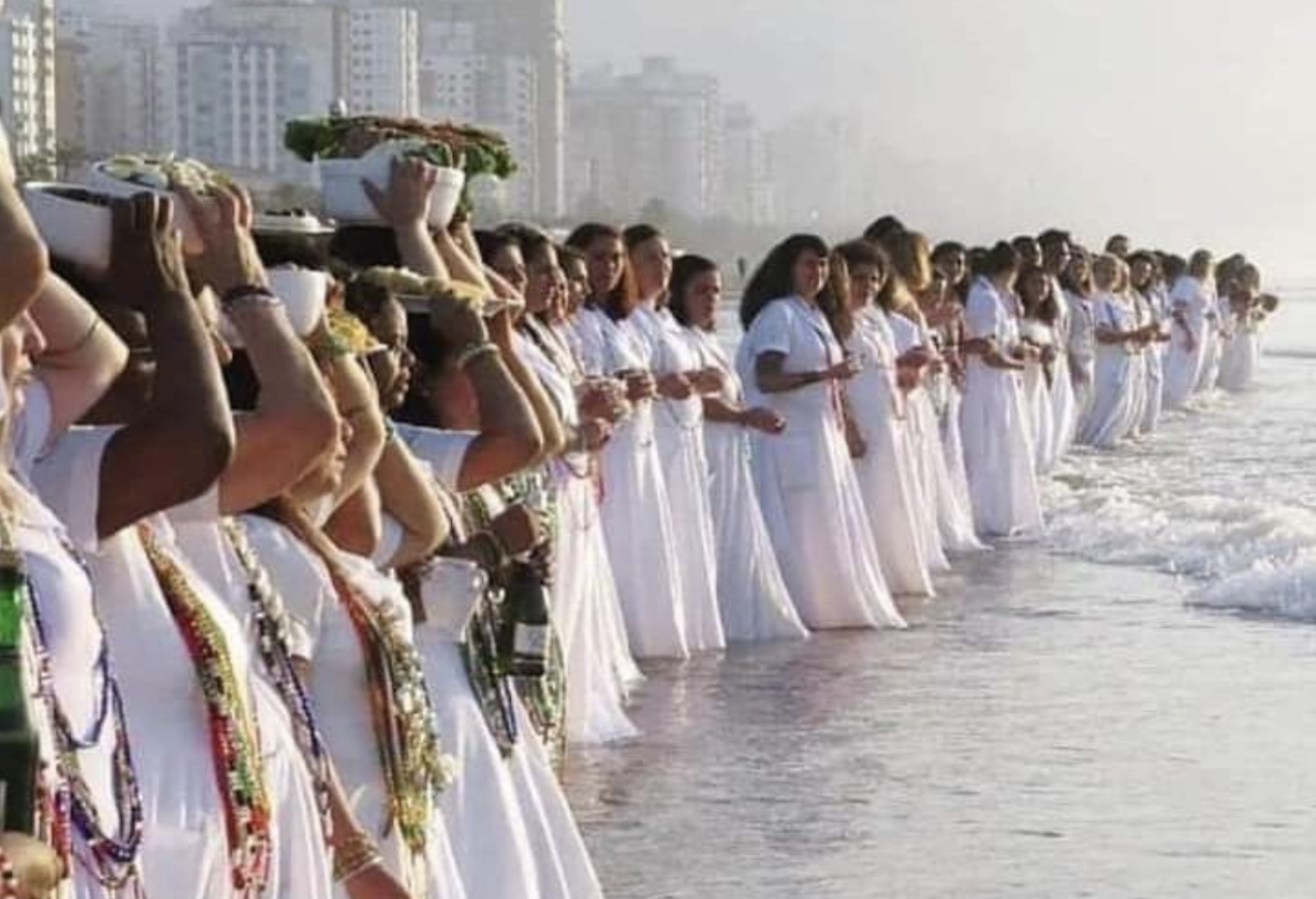
Every February in Brazil, many people dressed in white walk toward the sea. They carry flowers, songs and baskets. Celebrating and showing respect towards Water as a Living Being..
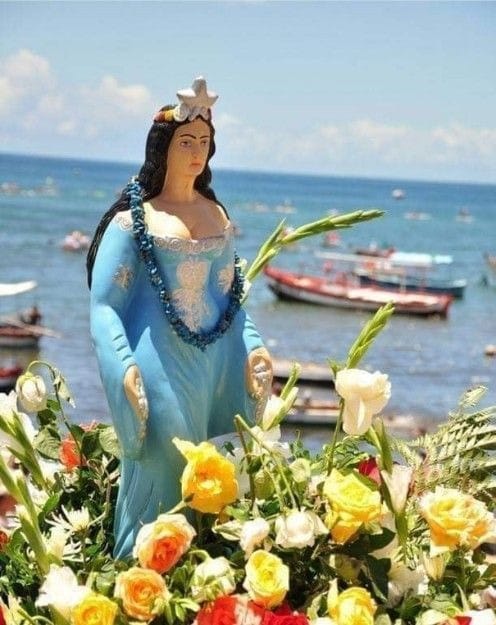
The celebration is for Mãe Yemanjá, or Mother Yemanjá, the Mother of the Waters and the Ocean for the Yoruba tradition of West Africa. She represents the ocean, care, fertility and protection. For many people in Brazil, she represents the force that sustains life.
Between the 1500s and 1800s, millions of Africans were forced to come to ‘the Americas’ by ship. Brazil was the country that received the largest number of people. They brought their languages, beliefs, music, culture, farming knowledge and ways of organizing their communities.
Although they were taken from their land, their traditions did not disappear. They changed and adapted.
To keep their beliefs alive without being punished, African communities connected their Gods, called Orixás, with Catholic saints. They used to put natural objects as stones, shells, and seeds that represent their Orixás below the catholic altars in the church,so they appeared to attend the misa, but in reality they continued practicing their own faith. This process is known as religious syncretism, and it shaped Brazilian culture.
Capoeira was born from the same situation. Africans who were oppressed in Brazil, and later their children, developed this art form that combines music, dance, acrobatics and self-defense. They were practicing arts, enjoying dance and music, and at the same time they knew that they were training to run away from slavery.
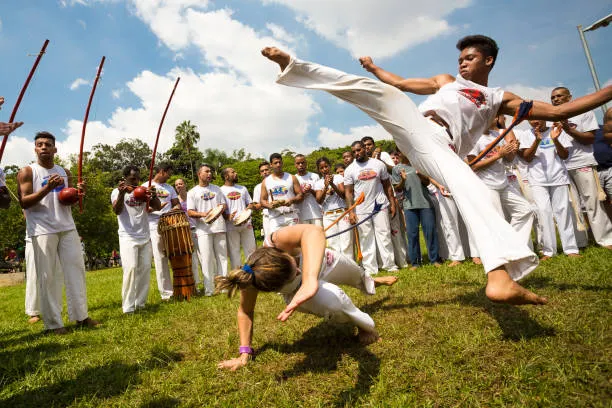
At first glance it looks like a game, but it involves strategy and training. It prepared people to defend themselves and, in some cases, to escape to quilombos, which were places where those fleeing slavery could hide and organize their lives. In other parts of Latin America, similar communities were called palenques.
In this cultural dance between Orixás, dignity and colonization healing, water was the route through which people were forced to travel, but it is also a symbol of continuity. The ocean separated families, but it also carried memory from one continent to another. For this reason, both the celebration of Yemanjá and the practice of capoeira can be understood as ways people protected their identity, dignity and collective knowledge, even in difficult times.
In cities such as Salvador de Bahia, offering gifts to the sea for Yemanjá is still part of everyday life. People bring flowers and meaningful objects and give them to the ocean as a gesture of gratitude. It is a way to honor the Being of Water and of recognizing that we are interconnected through a huge web of Life. .
Water connects bodies and places. It moves through landscapes and also exists within us. In many cultures, in Africa, in Asia, in the Americas and elsewhere, water has represented life, adaptation and renewal.
In March, when day and night are equal in length, it marks a moment of balance. Soon after, on 22 March, World Water Day invites people around the world to reflect on their relationship with this essential element.
These two moments give us a chance to pause.
What does water represent in your culture?Is She respected? How?What stories does it carry?Is Water for your culture a she, he, it, they?
In the Cultural Transformation Circle, we are interested in these stories as part of a shared learning process. They remind us that even when there are hardships, people can continue. Under pressure, traditions can change and still survive in new forms.We invite you to celebrate the March Equinox and World Water Day with us on Thursday, March 19th, 17:00 - 18:30h UTC You can save your spot here. During our gathering, we will explore how water connects memory, culture and community. We invite you to join us and to share how water is respected where you live.
When we care for water, we care for each other.
Sources:
https://bahia.ws/en/festa-de-iemanja-em-salvador/?utm_source
https://brasilescola.uol.com.br/educacao-fisica/capoeira.htm?utm_source
https://bahia.ws/en/historia-religioes-afro-brasileiras-bahia/?utm_source
Capoeira - A journey to the roots of this Afro-Brazilian martial artFesta de Iemanja 2025 - Salvador, Bahia, Brazil